NEW DELHI :
If the taxman is not satisfied with your submission in the Income Tax
Returns (ITR) or has a question for you, the Income Tax department might
send you a notice, letter or in serious cases even summon you. Now
taxpayers have been given the facility to verify the validity of all
such

The most comprehensive news portal for Chartered Accountants and Other Professionals around the world.
Wednesday, October 2, 2019
These 8 changes in financial sector to impact your expenses from October
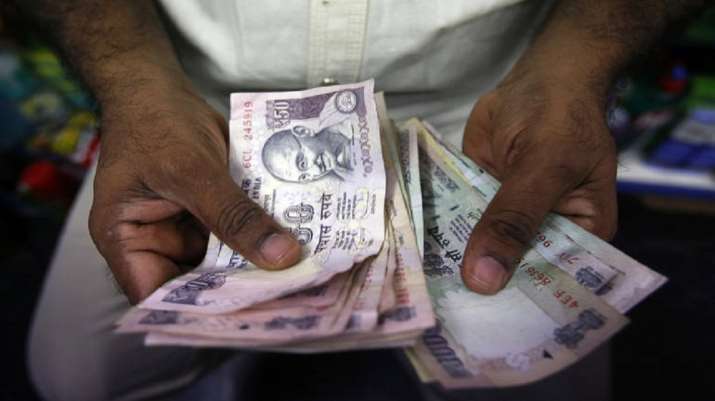
# No cashback on card payments at petrol pumps
In order to promote digital payment, a cashback offer was introduced by some state-owned oil companies more than two-and-a-half years ago. However, beginning 1st October, the bankers have

Tuesday, October 1, 2019
Introduction of OMR answer sheets in respect of the Multiple Choice Questions (MCQs) in Paper 6 of Final (New) Examination ( Elective paper), w.e.f November 2019 examination
| Important Announcement |
| 1st October, 2019 |
|
Introduction of OMR answer sheets in respect
of the Multiple Choice Questions (MCQs) in Paper 6 of Final (New)
Examination ( Elective paper), w.e.f November 2019 examination
In Paper 6 (Elective paper held on open book methodology) of Final (New Syllabus) examination, |
Diwali gift from Govt: a cut in personal income tax rate in offing
of the options is to introduce a 10 per cent slab for people having
taxable income between Rs 5 lakh and Rs 10 lakh. Currently, this slab
attracts a 20 per cent tax rate. There are also options to remove cess,
surcharge and several tax exemptions and reduce tax rate of the highest
slab from 30 per cent to 25 per cent, the report said.
"Depending on the impact the decision could have on revenue, various scenarios are being considered. But the idea is to give at least a 5 percentage point benefit to every taxpayer," the report
"Depending on the impact the decision could have on revenue, various scenarios are being considered. But the idea is to give at least a 5 percentage point benefit to every taxpayer," the report
Vacancy for CA in Morgan Stanley
Analyst - Finance
Employment Type: Full Time
Job Level: Analyst
: Non-Japan Asia-India-Maharashtra-Mumbai (MSA)
Education Level: Bachelor's DegreeEmployment Type: Full Time
Job Level: Analyst
DIR-3 KYC filing due date extented till 14.10.2019 [Read Notification]
Ministry of Company Affairs due to technical error in filing Form
DIR-3 KYC, last date for filing DIR-3 KYC for Financial year 2018-19 has
been extended till 14th October 2019. so carefully file
Monday, September 30, 2019
MCA requests companies to file annual returns at the earliest and not wait for the last date
To avoid last minute rush in annual filings during the months of October and November 2019, the Ministry of Corporate Affairs (MCA) has requested the companies to file their annual returns at the earliest.
In an advisory to the Corporates, MCA said, “To avoid last minute rush and
Business News
*Economic Times*
*Business Standard*
Ø China to send its top trade negotiator to US for talks
Ø PMC's HDIL loan stands at Rs 6,500 crore
Ø IRCTC offers attractive prospects going forward
*Business Standard*
Ø China to send its top trade negotiator to US for talks
Ø PMC's HDIL loan stands at Rs 6,500 crore
Ø IRCTC offers attractive prospects going forward
Sunday, September 29, 2019
Beware: There is no extention for default in furnishing income tax return today last day
As per the notification dated 27/09/2019 CBDT has clearly notified that there is no extention for default in furnishing income tax return and shall attract interest u/s 234A of the Act. The extention is only for assessee subject to tax audit u/s 44AB and hence the extention is only for filing tax audit report and not for filing of return.
What it means?
What it means?
There should be just 3 GST rates: 6, 12 & 18%
Chairman of the Economic Advisory Council to the Prime Minister Bibek Debroy tells Shantanu Nandan Sharma the goods and services tax (GST) is still a work in progress and argues that the two extreme rate slabs — zero and 28% — should be removed. Edited excerpts from the interview:
Two years and three months have passed since the implementation of the GST. Where are we today?
There are two ways to look at the GST. One is to build a consensus for creating an ideal GST with just one rate and every product being under it.
We could have deliberated, debated and waited for such an ideal GST to emerge in 20 years. The other way to look at it is, why wait for 20 years, let us start now. We know our GST is still a workin-progress. We know, we have to improve it as we go along. So we have found the second option more pragmatic.
We may still talk about the glitches, but we need to recognise that the GST Council has been a big success in terms of decision-making.
The way both the Union and states are working together is phenomenal. Also, let us not forget the success in terms of the GST subsuming all sorts of erstwhile taxes and the way freight moves today.
Before the introduction of the GST, it was estimated that the new tax reform would push GDP growth by 1-2 percentage points. But that does not seem to have happened.
In the long run, the GST will help GDP to grow because of its efficiency gain. But that can’t happen immediately. Had there been an ideal GST with just one rate, it would have pushed the GDP up. Countries around the world have struggled for 10-20 years to achieve a near perfect VAT (value added tax). So, I feel, it was unrealistic to estimate that GST would drive GDP growth by 1-2% percentage points.
State governments are now arguing that the compensation be extended beyond five years. Do you subscribe to that view?
The compensation was meant for persuading the state governments to agree to the GST. The states were assured that for five years the Union government would make up their revenue loss, if any. But that can’t be open-ended. After all, GST is 50:50 between the Centre and the states.
So, both have to suffer in case of any revenue loss. I don’t find it tenable that the Union government will continue to bail out the states.
Why do you think many small companies are still unhappy with GST?
GST is a chain. But now, companies below a threshold are out of this chain; they are hence out of the GST. Earlier, bigger companies used to buy from them. But they have stopped doing that now because if they do, they will not receive credits. By setting artificial thresholds, despite being done with the best of intentions, we closed the doors for smaller entities. The large companies are now sourcing only from large companies, or else, they are importing.
GST is a tax paid by consumers, not by producers.
Ideally, everyone should have been part of this process.
For small and medium companies, the GST has also complicated matters because of various rates and processes.
But there is another issue that most people are reluctant to talk about. Some entities which never paid taxes earlier are now forced to pay. ‘Kachi raseed’
Two years and three months have passed since the implementation of the GST. Where are we today?
There are two ways to look at the GST. One is to build a consensus for creating an ideal GST with just one rate and every product being under it.
We could have deliberated, debated and waited for such an ideal GST to emerge in 20 years. The other way to look at it is, why wait for 20 years, let us start now. We know our GST is still a workin-progress. We know, we have to improve it as we go along. So we have found the second option more pragmatic.
We may still talk about the glitches, but we need to recognise that the GST Council has been a big success in terms of decision-making.
The way both the Union and states are working together is phenomenal. Also, let us not forget the success in terms of the GST subsuming all sorts of erstwhile taxes and the way freight moves today.
Before the introduction of the GST, it was estimated that the new tax reform would push GDP growth by 1-2 percentage points. But that does not seem to have happened.
In the long run, the GST will help GDP to grow because of its efficiency gain. But that can’t happen immediately. Had there been an ideal GST with just one rate, it would have pushed the GDP up. Countries around the world have struggled for 10-20 years to achieve a near perfect VAT (value added tax). So, I feel, it was unrealistic to estimate that GST would drive GDP growth by 1-2% percentage points.
State governments are now arguing that the compensation be extended beyond five years. Do you subscribe to that view?
The compensation was meant for persuading the state governments to agree to the GST. The states were assured that for five years the Union government would make up their revenue loss, if any. But that can’t be open-ended. After all, GST is 50:50 between the Centre and the states.
So, both have to suffer in case of any revenue loss. I don’t find it tenable that the Union government will continue to bail out the states.
Why do you think many small companies are still unhappy with GST?
GST is a chain. But now, companies below a threshold are out of this chain; they are hence out of the GST. Earlier, bigger companies used to buy from them. But they have stopped doing that now because if they do, they will not receive credits. By setting artificial thresholds, despite being done with the best of intentions, we closed the doors for smaller entities. The large companies are now sourcing only from large companies, or else, they are importing.
GST is a tax paid by consumers, not by producers.
Ideally, everyone should have been part of this process.
For small and medium companies, the GST has also complicated matters because of various rates and processes.
But there is another issue that most people are reluctant to talk about. Some entities which never paid taxes earlier are now forced to pay. ‘Kachi raseed’
Govt compulsorily retires 15 more senior tax officials on graft charges
The government has compulsorily retired 15 more tax officers in the fourth tranche of its crackdown on errant officials accused of corruption and other malpractices.
The Central Board of Direct Taxes(CBDT) compulsorily retired 15 senior officers under Fundamental Rule 56(J) on corruption and other charges, official sources
The Central Board of Direct Taxes(CBDT) compulsorily retired 15 senior officers under Fundamental Rule 56(J) on corruption and other charges, official sources
Saturday, September 28, 2019
The Dow Is Down After Reports the U.S. Is Considering Delisting Chinese Stocks
The Dow has dropped 155.18 points, or 0.6%, to 26,735.94, while the S&P 500 has fallen 1% to 2948.82, and the Nasdaq Composite has slumped 1.6% to
Break-in Reported At Income-Tax Office Handling Chanda Kochhar, Ambani Cases
The Indian Express on Friday reported on an alleged break-in at an Income Tax unit in Mumbai’s Aayakar Bhavan.
The unit is handling a number of high-profile cases, including the ICICI Bank-Videocon case involving Chanda Kocchar’s husband Deepak and the notices served to Mukesh Ambani’s wife Nita and their three children under the Black
Friday, September 27, 2019
Thursday, September 26, 2019
CBDT has decided to extend the due date for filing of ITRs & Tax Audit Reports from 30th Sep,2019
Income Tax IndiaVerified account @IncomeTaxIndia
On consideration of representations recd from across the country,CBDT has decided to extend the due date for filing of ITRs & Tax Audit Reports from 30th Sep,2019 to 31st of Oct,2019 in respect of
Tuesday, September 24, 2019
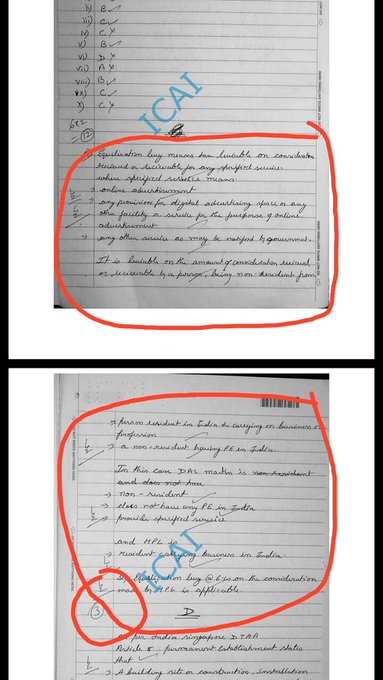
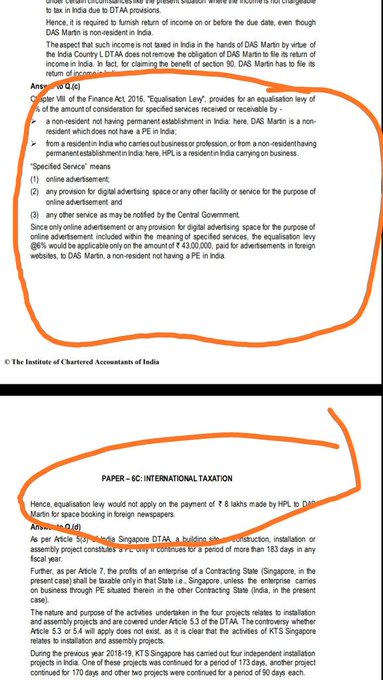
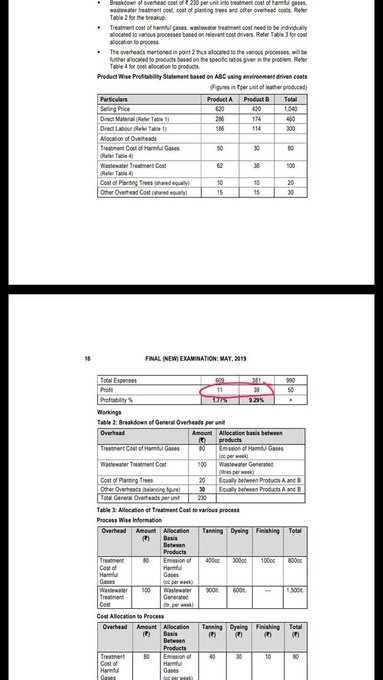
ICAI CA Protest Day 2: CA aspirants protest at 200 branches, demand right to revaluation of papers
#dearICAIpleasechange is trending on Twitter. Thousands of chartered accountant (CA) aspirants thronged the branches of ICAI on Tuesday, the second day of protest. On Monday, September 23, several CA aspirants had started a protest against Institute of Chartered Accountant (ICAI) over alleged error in checking their copies.

ICAI CA Protest: Thousands of chartered accountant (CA) aspirants thronged the branches of ICAI on Tuesday, the second day of protest. On Monday, September 23, several CA aspirants had started a protest against Institute of Chartered Accountant (ICAI) over alleged error in checking their copies.
Many candidates had alleged that their answers were not evaluated correctly.
#dearicaipleasechange
i did not got what i deserved and where is your step marking pattern because i couldn't found it in my copy

29 people are talking about this
The hashtag #dearICAIpleasechange started trending on Twitter after aspirants from all over India started updating about the protests. The CA
Not got your income tax refund yet? Here's how you can raise a re-issue request
You are eligible to receive income tax refund if you have paid more tax to the government than your actual tax liability. This usually happens when the advance tax, self-assessment tax paid or TDS deducted of the taxpayer is higher than the total tax liability of a taxpayer.
If the tax department determines, after processing your income tax return (ITR), that a refund is payable to you, an intimation is sent to you via SMS and email. The intimation notice received by you shows the amount of refund that will be credited into your account along with a refund sequence number. An intimation is sent to you under section 143 (1) of the income tax Act.
Do keep in mind that you will only get the refund if into a pre-validated bank account. Now, if for some reason you have not received the refund amount, then you can raise a service request on the e-filing portal.
Things to remember
Before you raise the request for the refund re-issue on the e-filing website, remember that rejection of refund on tin-nsdl website must be reflected. If you cannot track the status of your tax refund or until the reason of rejection is reflected on the e-filing website, then you cannot raise the refund re-issue request.
In such a case you have to raise a grievance on the e-filing website, under the 'e-Nivaran' tab.
Also Read: How to track income tax refund status
How to raise refund re-issue request
According to the income tax department's e-filing website, these are the steps you should follow to re-issue the refund amount.
Step 1: Logon to 'e-Filing' Portal www.incometaxindiaefiling.gov.in
If the tax department determines, after processing your income tax return (ITR), that a refund is payable to you, an intimation is sent to you via SMS and email. The intimation notice received by you shows the amount of refund that will be credited into your account along with a refund sequence number. An intimation is sent to you under section 143 (1) of the income tax Act.
Do keep in mind that you will only get the refund if into a pre-validated bank account. Now, if for some reason you have not received the refund amount, then you can raise a service request on the e-filing portal.
Things to remember
Before you raise the request for the refund re-issue on the e-filing website, remember that rejection of refund on tin-nsdl website must be reflected. If you cannot track the status of your tax refund or until the reason of rejection is reflected on the e-filing website, then you cannot raise the refund re-issue request.
In such a case you have to raise a grievance on the e-filing website, under the 'e-Nivaran' tab.
Also Read: How to track income tax refund status
How to raise refund re-issue request
According to the income tax department's e-filing website, these are the steps you should follow to re-issue the refund amount.
Step 1: Logon to 'e-Filing' Portal www.incometaxindiaefiling.gov.in
Monday, September 23, 2019
ICAI sends representation to CBDT for extension of time for submission of Tax Audit reports
Representation to CBDT requesting for extension of time for submission of Tax Audit Reports and related returns from 30th September, 2019 to 30th November, 2019 Section 44AB of the Income-tax Act, 1961 requires the assessee to get his accounts audited by
Subscribe to:
Posts (Atom)

